
Spectroscopic Sample Preparation: Techniques for Accurate Results
Spectroscopic Sample Preparation: Techniques for Accurate Results
Are you aware that inadequate sample preparation is the cause of as much as 60% of all spectroscopic analytical errors? Spectroscopic sample preparation significantly impacts the validity and accuracy of your analytical findings. Unless your samples are properly prepared, you risk collecting misleading data that can compromise research projects, quality control practices, and analytical conclusions.
Sample preparation of spectroscopic proof entails a high degree of care and technique-specific techniques. Whether you are employing XRF, ICP-MS, FT-IR, or Raman spectroscopy, how you prepare your sample determines the quality of the data that you will end up with. Many labs invest heavily in advanced analytical equipment but do not appreciate the significance of sample preparation equipment and procedures.
This comprehensive guide will lead you step-by-step through proven methodologies in sample preparation for different spectroscopic methods. You will understand how to select suitable grinding and milling equipment, prevent contamination, and troubleshoot most common preparation issues. Through acquiring these fundamentals of preparation, you will always obtain more accurate, reproducible spectroscopic results.
Understanding Spectroscopic Methods and Their Requirements
Spectroscopy is the backbone of modern analytical chemistry and allows scientists to decode the material composition and structure using the response of light when exposed to matter. Before you can discuss preparation methods, understanding what these methods are will give you valuable information on why sample preparation is so important.
What is Spectroscopic Analysis?
Spectroscopy is the study of the behavior of electromagnetic radiation near matter. This analytical technique essentially measures the absorption, emission, or scattering of electromagnetic radiation by molecules or atoms. Every material reacts differently to different wavelengths of light, leading to typical spectral “fingerprints” that reveal its content.
The foundation of spectroscopy is the law of quantum mechanics—molecules and atoms have only certain energy states. They release or take in energy in the form of photons with specific wavelengths when they transition from one such state to another. These patterns of wavelengths constitute spectra upon which elements and compounds can be identified.
Spectroscopic techniques differ primarily in:
- The kind of radiation utilized (infrared, X-ray, UV-visible, etc.)
- The nature of the interaction being quantified (absorption, emission, etc.)
- Information obtained (elemental composition, molecular structure, etc.)
What is Metallography? Definition, Techniques & Industrial Applications
Why Sample Preparation Influences Accuracy
Sample preparation directly relates to the quality and integrity of spectroscopic data. Not even the latest instrumentation can compensate for badly prepared samples. Preparation problems affect results in several fundamental ways:
Surface and particle characteristics influence the way that radiation behaves with your sample. Rough surfaces scatter light in a random manner, while monodisperse particle size ensures uniform interaction with radiation. Moreover, greater than a small amount of variation in particle size creates sampling error that compromises quantitative analysis.
Matrix effects result from sample matrix constituents absorbing or adding to spectral signals, obscuring or enhancing the analyte response. Proper preparation techniques remove such interferences by diluting, extracting, or matching matrices.
Homogeneity is necessary for representative sampling. Heterogeneous samples yield non-reproducible results because the sample portion under examination may not represent the whole sample. Grinding, milling, and mixing techniques prepare homogeneous samples that yield reproducible, reliable data.
Contamination introduces unwanted material that results in spurious spectral signals. Cross-contamination between samples or from equipment used in preparation can make results worthless. Proper cleaning techniques are still a necessity through the preparation process.
Overview of Most Frequent Spectroscopic Methods (XRF, ICP-MS, FT-IR)
X-Ray Fluorescence (XRF) Spectrometry determines the elemental composition by the measurement of secondary X-rays from material irradiated with high-energy X-rays. Preparation for XRF is primarily focused on:
- Preparation of flat, homogeneous surfaces
- Particle size adjustment to the proper range (usually <75 μm)
- Preparation of pressed pellets or fused beads for equal density
Inductively Coupled Plasma-Mass Spectrometry (ICP-MS) provides very sensitive elemental analysis by ionizing samples in plasma and mass-separated ions. The technique demands:
- Total dissolution of solid samples
- Accurate dilution to appropriate concentration ranges
- Removal of particles by filtration
- Shielding against contamination by reagents
Fourier Transform Infrared Spectroscopy (FT-IR) identifies molecular structure by patterns of infrared absorption. The preparation of samples is sample-dependent:
- Solid samples require grinding with KBr for pellet production
- Liquid samples need the appropriate solvents and cells
- Gas samples must be sampled in gas cells at the appropriate pressures
Each technique presents difficulties that demand unique preparation techniques. The optical properties of materials in the case of FT-IR, particle size for XRF, or dissolution condition for ICP-MS all demand specialized preparation protocols that preserve sample integrity while optimizing analytical performance.
By mastering these fundamentals, you will have an understanding of the critical relationship between proper preparation and appropriate spectroscopic result. Subsequent sections present particular preparation techniques specific to certain types of samples and analytical situations.
Solid Sample Preparation Techniques for Spectroscopy
Careful solid sample preparation remains the foundation for producing repeatable spectroscopic data. The physical and chemical characteristics of your solid samples directly influence spectral quality, requiring expert techniques to transform raw materials into analyzable specimens. Each preparation method is created to achieve a precise role in offering the homogeneity, particle size, and surface quality required for valid analysis.
Grinding with Spectroscopic Grinding Machines
Grinding reduces the particle size and generates homogeneous samples through mechanical friction. The method greatly impacts spectral quality through equal interaction with radiation. Spectroscopic grinding equipment employs specialized materials that minimize contamination but maximize sample integrity.
When selecting grinding equipment, consider:
- Material hardness – Harder materials require grinding equipment with higher power and specialized grinding surfaces
- Final particle size requirements – Different spectroscopic techniques require specific particle sizes (typically <75μm for XRF)
- Hazards of contamination – Choose grinding surfaces that will not add variables that will interfere with your analysis
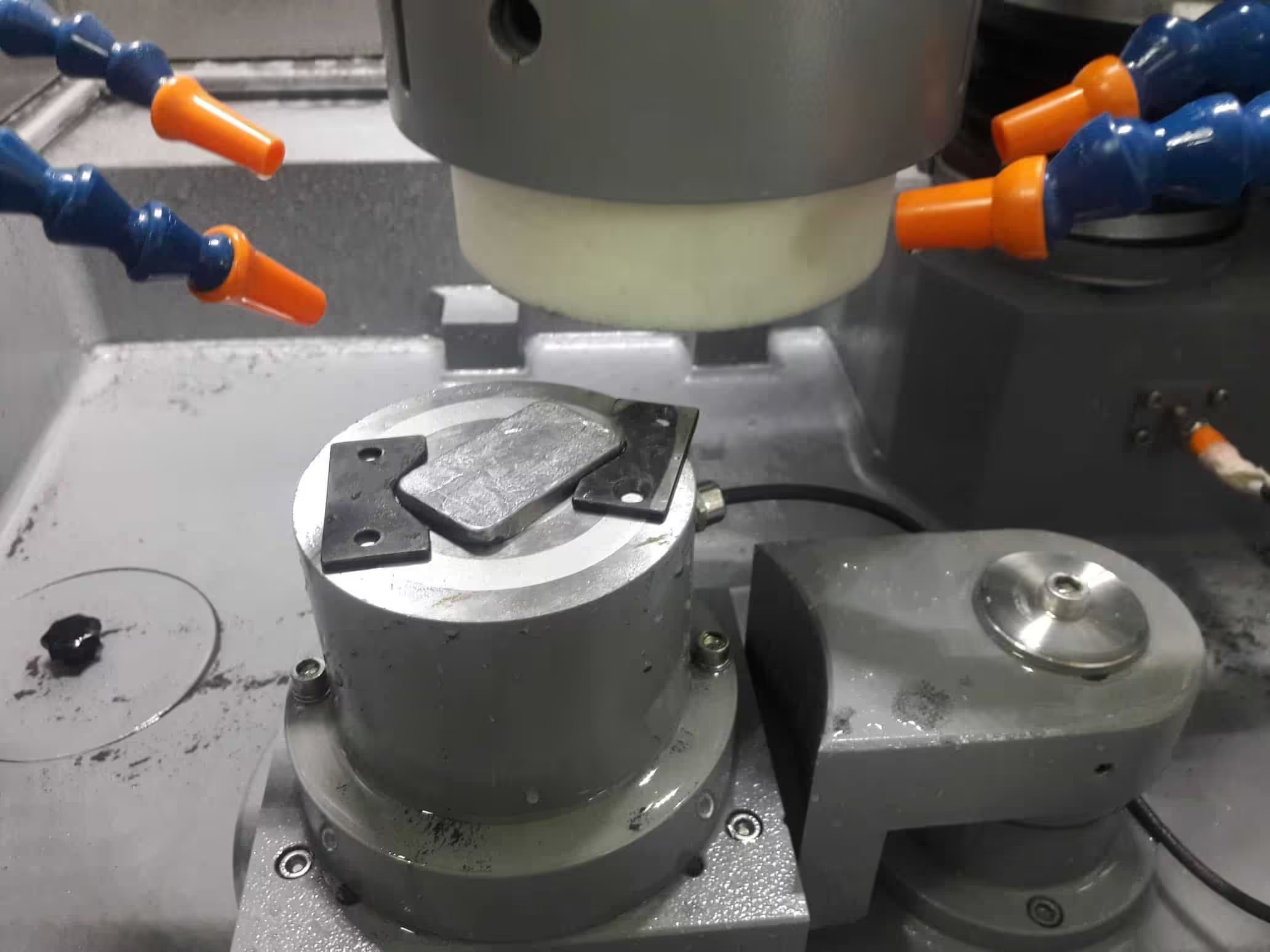
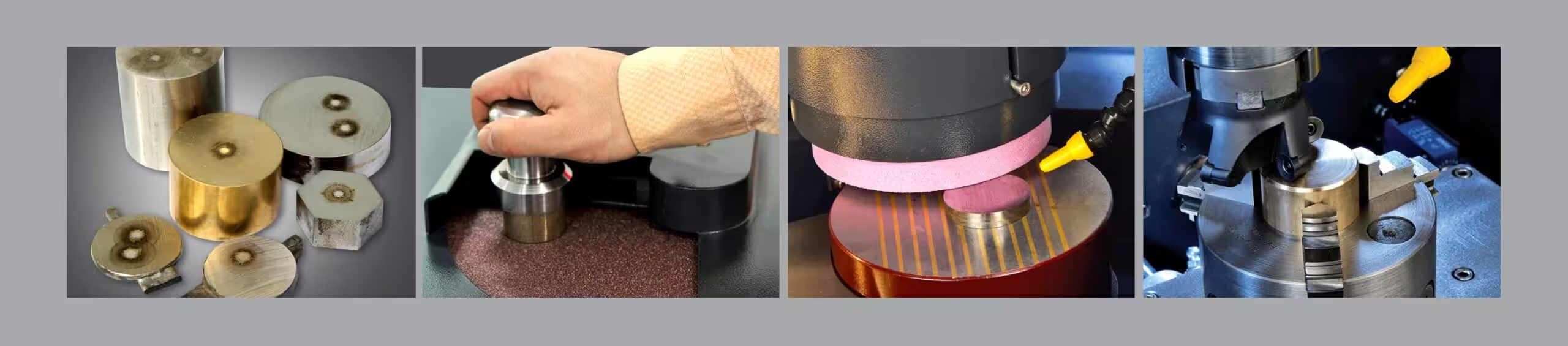
Swing grinding machines are ideal for grinding tough samples like ceramics and ferrous metals. Swing grinding machines use oscillating motion rather than direct pressure, reducing heat formation which might alter sample chemistry. For optimum results, grind every sample set under identical grinding time and clean intensively between samples to preclude cross-contamination.
Milling With Spectroscopic Milling Machines
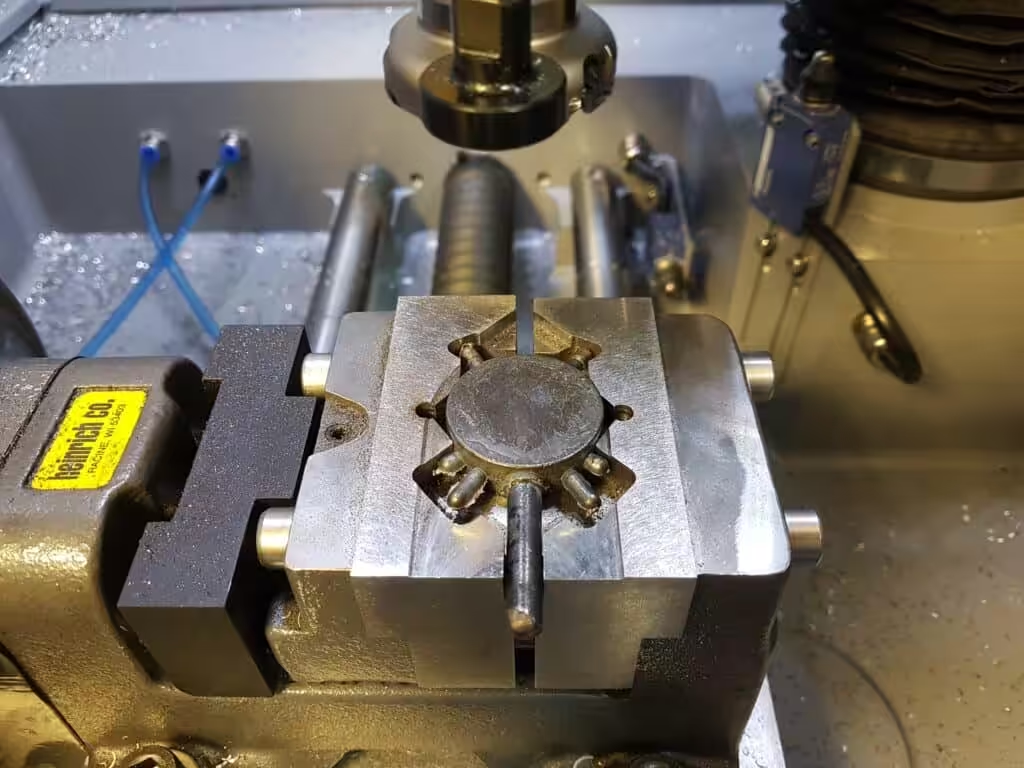
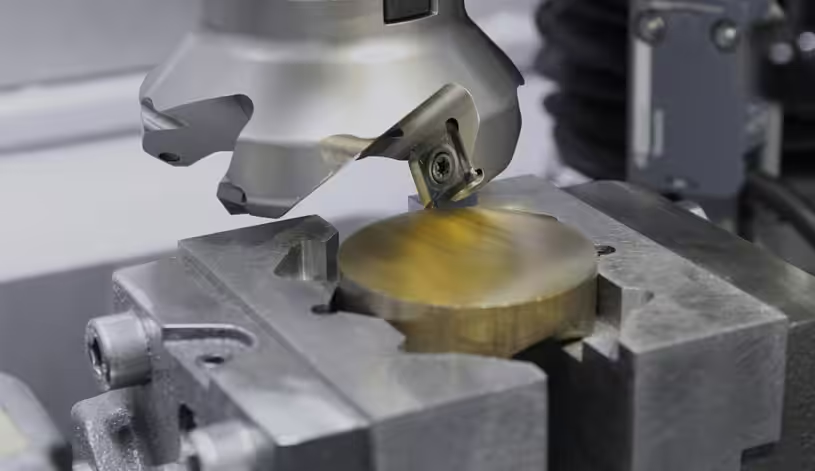
Milling provides more particle size reduction control than grinding. Fine-surface milling machines can be operated automatically to provide higher surface quality, particularly with non-ferrous materials like aluminum alloys and copper.
The even, flat surfaces of milled parts enhance spectral quality by:
- Minimizing the effects of light scattering reducing signal-to-noise ratios
- Offering consistent density across the sample surface
- Exposing internal material structure for more representative analysis
Modern spectroscopic milling machines have programmable parameters like rotational speed, feed rate, and cutting depth. Additionally, dedicated cooling systems reduce thermal degradation when processing. Quantitative accuracy in precise XRF analysis depends on surface quality and is thus essential for accuracy work, and appropriate milling is vital.
Pelletizing for XRF Sample Preparation
Pelletizing transforms powdered samples into solid disks of uniform surface properties and density for XRF analysis. The method yields samples with a uniform X-ray absorption property, which is capable of quantitative analysis accurately.
The pelletizing operation typically comprises:
- Blending the ground sample with a binder (e.g., wax or cellulose)
- Pressing using hydraulic or pneumatic presses (typically 10-30 tons)
- Pellet production of flat, smooth surfaces and equal thickness
Proper pellet preparation affects the accuracy of analysis through improved sample stability and reduced matrix effect. Poorer binding powders may need binders like boric acid or lithium tetraborate. Nevertheless, always take dilution factors into account when setting up the final concentrations.
Fusion Techniques for Non-Ferrous Materials
Fusion is the most stringent preparation technique for complete dissolution of refractory material into homogeneous glass disks. Fusion prevents particle size and mineral effects that plague other preparation techniques.
The fusion process involves:
- Blending the ground sample with a flux (lithium tetraborate being the usual one)
- Melting at temperatures between 950-1200°C in platinum crucibles
- Casting the molten charge as a disk for analysis
Fusion is superior to silicate materials, minerals, and ceramics by totally breaking down crystal structures. Additionally, the technique standardizes the sample matrix, eliminating matrix effects that slow quantitative analysis. Although it costs more compared to pressing techniques, fusion has unparalleled accuracy for hard-to-analyze materials like cement, slag, and refractory oxides.
Every solid sample preparation technique has its own advantages depending on the type of material you have and what your analysis requires. Your decision essentially determines the quality and reliability of your spectroscopic information.
Liquid and Gas Sample Preparation Techniques
Unlike solids, liquid and gaseous samples present unique analytical issues that require unique preparation methods. Physical state affects everything from container selection to handling protocol. Understanding these nuances delivers precise, reproducible results under diverse spectroscopic techniques.
Dilution and Filtration for ICP-MS
Inductively Coupled Plasma Mass Spectrometry (ICP-MS) demands stringent liquid sample preparation due to its high sensitivity. Subtle preparation errors can radically skew analytical results.
First, dilution of the sample forms the basis of ICP-MS preparation. This initial step:
- Plots analyte concentrations into the range that is most suited for instrument detection
- Reduces matrix effects that will disrupt accurate measurement
- Reduces damage to sensitive instrument parts from high salt levels
The factor of dilution must be calculated accurately in accordance with expected analyte concentration and matrix complexity. Samples with dense dissolved solid content generally must be diluted more—sometimes more than 1:1000 in case of highly concentrated solutions.
Filtration subsequently removes suspended material that could contaminate nebulizers or hinder ionization. Filtration using 0.45 μm membrane filters will be adequate in most ICP-MS uses, but ultratrace analysis might necessitate 0.2 μm filtration. Always select filter materials that won’t introduce contamination or adsorb analyte of interest—PTFE membranes typically provide the best balance of chemical resistance and low background.
High-purity acidification with nitric acid (typically to 2% v/v) retains all metal ions in solution by preventing precipitation and adsorption against vessel walls. Internal standardization also compensates for matrix effects and instrument drift, improving quantitative accuracy.
How to Prepare Metallographic Samples – Complete Step-by-Step Guide (With Expert Tips)
Solvent Selection for UV-Vis and FT-IR
The choice of solvent influences spectral quality significantly for both UV-Visible and FT-IR spectroscopy. The optimum solvent dissolves your sample completely without being spectroscopically active in the analytical region of interest.
For use in UV-Vis, keep the following solvent properties in mind:
- cutoff wavelength (below which the solvent absorbs strongly)
- Polarity (effects solubility of target compounds)
- Purity grade (sensitivity-grade solvents minimize background interference)
Common UV-Vis solvents include water (~190 nm cutoff), methanol (~205 nm cutoff), acetonitrile (~190 nm cutoff), and hexane (~195 nm cutoff). Notably, polar solvents dissolve polar compounds most well, and non-polar solvents dissolve non-polar analytes best.
For FT-IR, even more critical is the selection of solvents since solvent absorption bands can overlap with significant analyte features. Chloroform and carbon tetrachloride were formerly common for their mid-IR transparency, although health has put restrictions on their use. Now, deuterated solvents like deuterated chloroform (CDCl3) are excellent alternatives, showing transparency across most of the mid-IR spectrum with minimal interfering absorption bands.
Sample concentration must be optimized for the acquisition of absorbance values between 0.1 and 1.0 for UV-Vis and appropriate peak heights for FT-IR. Overly high concentrations cause detector saturation, whereas samples which are too dilute cause signal-to-noise ratios to become too low.
Gas Sampling for Optical Emission Spectrometry
Gas sample preparation for optical emission spectrometry requires specialized techniques to maintain sample integrity and yield accurate compositional analysis. Gasses present unique challenges in containment, stability, and representative sampling when compared to solids and liquids.
Gas sampling most often uses specialized collection devices such as evacuated flasks, gas sampling bags, or pressurized gas cylinders. They are chosen depending on gas reactivity, concentration, and stability requirements. Teflon- or aluminum-coated sampling bags prevent sample diffusion and minimize wall reactions and are therefore usable with reactive species.
Pressure and temperature control in sampling directly affect quantitative accuracy. According to the ideal gas law, pressure and temperature variations alter gas density and thus analytical response. Therefore, all gas samples must be adjusted to standard conditions before analysis, which is typically 25°C and 1 atm pressure.
Calibration of gas analysis is typically based on certified gas standards that closely simulate the sample matrix. Matrix matching compensates for plasma conditions, which affect emission characteristics. With complex mixtures, multi-component standards may be necessary to provide for potential spectral interferences.
Finally, moisture control remains vital in accurate gas analysis. Water vapor fouls many analytical lines and leads to plasma instability. Drying tubes packed with desiccants like magnesium perchlorate or molecular sieves eliminate moisture effectively without altering sample composition.
Choosing the Right Sample Prep Equipment
Selecting the appropriate equipment is a very important aspect to a successful spectroscopic result. Quality equipment not only simplifies your process but also minimizes contamination risks and enhances analytical precision. Every technique of spectroscopic analysis has its own preparation techniques, and so proper equipment selection is required for good results.
Spectroscopic Sample Preparation Machines Overview
Equipment for spectroscopic sample preparation is classified into a number of categories based on function and type of sample. These include:
- Grinding and milling machine: provide higher surface quality
- Pressing machines: Create pellets of powdered specimens
- Fusion apparatus: Produce glass disks from refractory materials
- Sample containers: Maintain proper sample alignment during analysis
When evaluating preparation apparatus, aside from initial cost, consider:
- Sample throughput demands
- Types of materials most frequently processed
- Required particle size and surface finish
- Contamination prevention capabilities
- Maintenance ease and cleanliness
The instrumentation you select ultimately affects measurement reproducibility, accuracy, and precision. For instance, substandard grinding instrumentation consistently produces uneven particle sizes that create dramatic variations in analytical results.
Automatic Fine-Surface Milling Machines
Automatic fine-surface milling machines specifically excel at pre-treating non-ferrous metals such as aluminum, copper, bronze, and brass for spectroscopic analysis. These high-precision instruments produce extremely flat, extremely smooth surfaces ideal for XRF and optical emission spectroscopy.
The key features of such machines typically are:
Above all, automatic feed systems that offer consistent surface quality regardless of operator competence. In effect, programmable milling parameters allow precise control of rotation speed, cutting depth, and feed rate. Specifically, newer versions include touch-screen controls with pre-programmed programs for standard sample types.
The milling heads utilize specialty diamond or carbide cutters that ensure minimum contamination while maximizing surface quality. Indeed, the most advanced equipment has integrated automatic cleaning capabilities that eliminate material residue between samples, preventing cross-contamination that will compromise analytical results.
Swing Grinding Machines for Hard Materials
For tough materials like cast iron, steel, and ceramics, swing grinding machines provide superior preparation quality. Oscillating motion rather than direct pressure is utilized by these robust machines to gradually reduce material with minimum heat generation.
The distinctive swing-pendulum design distributes grinding forces evenly over the sample surface. As a result, sample heating is minimized, enabling chemical and physical properties that may be altered during preparation to be preserved.
Effective swing grinders encompass:
- Adjustable pressure grinding to accommodate changing hardness of materials
- Replaceable grinding surfaces to accommodate various applications
- Ergonomic design to maintain operator comfort and safety
- Water cooling arrangements for sensitive materials to heat
For metallurgical samples, these machines give the ideal flat surface required for dependable elemental examination, which is an important necessity in quality control applications where accuracy directly impinges on manufacturing.
Stone Cup Wheels and Their Applications
Stone cup wheels are significant accessories to grinding machines when grinding highly challenging samples. These grinding tools are made by abrasive materials cemented into cup-shaped form that may be fitted on grinding tools.
A range of abrasive materials is utilized for different purposes:
Silicon carbide wheels are efficient when grinding non-ferrous metals and alloys, whereas aluminum oxide ones are more suitable with ferrous materials. Additionally, diamond-impregnated wheels grind extremely hard materials like ceramics and composites.
The grain size of the abrasive material directly affects the quality of surface finish—larger grains shave off quickly but coarser surfaces are created in the process, while finer grained abrasives produce smooth finishes necessary for high-accuracy spectroscopy. Finally, the choice depends largely on your specific analytical requirements and on material properties.
Whatever equipment you opt for, regular maintenance and cleaning processes still need to be adhered to for reproducible outputs in all spectroscopic applications.
Avoiding Contamination and Sample Loss
Even trace contamination has the ability to divert spectroscopic analysis, necessitating rigorous prevention measures along the course of the sample preparation process. Even the most sophisticated equipment cannot compensate for contaminated samples, and extensive cleanliness is a must rather than an optional procedure.
Cross-Contamination Risks in Grinding
Cross-contamination is most likely to occur in grinding operations, where material transfer between one sample and another can seriously compromise analytical results. The primary sources of contamination are:
First and foremost, incomplete cleaning between samples leaves residual material that transfers to subsequent specimens. This risk increases with porous grinding surfaces that trap fine particles. In fact, materials like cast iron can embed microscopic particles in grinding equipment, contaminating dozens of future samples.
Abrasion of grinding equipment contaminates your samples with foreign particles. For example, metal particles from corroded grinding vessels contaminate with iron, chromium, or nickel. To minimize this risk, thoroughly inspect equipment surfaces for wear or corrosion prior to processing analytical samples.
Environmental contaminants represent another acute problem. Laboratory air particulate, operators’ cell shedding, or cleaning agent residue may all contribute uncontrolled components to your samples. Due to this, enclosed grinding systems or clean room spaces are commonly used by most laboratories for sample preparation.
Sample Holder Cleaning Procedures
Routine cleaning of sample holders prevents contamination and memory effects that bias analytical results. Implement these systematic cleaning practices:
- Start mechanically cleaning with compressed air or brushes to clean loose particles
- Proceed to solvent washing depending on sample compatibility
- Do ultrasonic cleaning for hard residues
- Check for cleanliness by blank analysis prior to reuse of holders
Solvent choice is based on contaminants present. Non-polar organic compounds are cleaned with acetone or hexane, while water-soluble materials are cleaned with aqueous cleaning solutions. However, always end with final rinses using high-purity solvents to avoid introducing new contaminants.
For preparation of XRF samples, trace metal contamination is of particular concern. Dilute nitric acid (2-5%) acid washing deans sample cups and pressing dies by dissolving metal residues. Most importantly, rinse acid-deaned parts extensively with deionized water to prevent acid carryover that will ruin subsequent samples.
Proper Storage and Labeling Techniques
Storage preserves sample integrity and guards against degradation of the sample and cross-contamination between analysis and collection. Generally, choose container materials based on sample properties—glass for organic samples, polyethylene for aqueous solutions, and specialized containers for reactive materials.
Environmental conditions have a great impact on sample integrity. Light exposure increases photodegradation of photo-sensitive compounds, while temperature changes may change physical properties or enable chemical reactions. Particularly, samples for spectroscopic analysis should ideally be stored:
- Away from sunlight or intense artificial light
- At stable temperatures (typically less than 25°C)
- In low-humidity settings to avoid moisture uptake
Labeling systems that ensure thorough identification to avoid mix-ups that taint whole analytical batches are essential. Sample ID, collection date, preparation technique, and any pretreatment procedures done are some label information that is needed. Further, a sequential numbering system with corresponding documentation makes an auditable history of preparation for each sample.
Barcoded or QR code labeling computer systems linked to laboratory information management systems (LIMS) decrease the likelihood of human intervention in sample tracking. Combined with precise physical storage, these systems ensure sample integrity from collection through analysis, preserving the integrity of your spectroscopic results.
Best Practices and Troubleshooting Guide
Mastery of spectroscopic analysis really rests on systematic preparation methods and troubleshooting procedures. Outside of equipment choice and contamination avoidance, your analytical success rests on the implementation of proven practices that guarantee consistent, reliable results.
Spectroscopic Sample Preparation Best Practices
Documentation is the foundation of effective spectroscopic sample preparation. Make accurate records of every preparation step, essentially creating an audit trail so that results can be checked and methods refined. For every sample, note grinding times, temperature conditions, instrument settings, and any irregularities noted.
Standardizing procedures minimizes variability from operators. Create custom standard operating procedures (SOPs) with specific steps, instrument settings, and quality controls for each type of sample. Concurrently, conduct periodic training to provide consistent use to lab personnel.
Regular equipment maintenance exists to support mostly analytical performance. Schedule preventive maintenance on the basis of use, keeping exhaustive maintenance records for tracking component replacement and performance patterns.
Troubleshooting Unreliable Results
Confronted with variable results, consider in sequence
- Study sample homogeneity issues – asymmetrical particle distribution often causes reproducibility problems
- Study calibration status – out-of-date or contaminated standards produce changing results
- Study for contamination – even trace contaminants profoundly impact spectral quality
Quantitation problems typically result from matrix effects. Matrix matching standards or standard addition techniques properly compensate for these interferences. However, sensitivity problems typically indicate detector problems or sample concentration outside the optimum range.
Calibration and Standardization Tips
Certified reference materials (CRMs) form the foundation of accurate calibration. Select CRMs that most closely approximate your sample matrices to minimize correction factors. Meanwhile, maintain secondary standards for daily check to avoid depletion of valuable primary standards.
Multi-point calibration is better than single-point approaches because it exposes non-linearity that can otherwise go unnoticed. Practically speaking, the calibration range must bracket expected analyte concentrations in your samples.
Check calibration stability through periodic examination of quality control samples during analytical runs. Address any drift outside pre-established control levels immediately, since instrument stability is a direct reflection on data reliability.
Conclusion
Whether or not your analytical work is successful depends ultimately on the mastery of spectroscopic sample preparation techniques. Through this manual, you have learned how proper preparation influences the quality and reliability of spectroscopic information in various analytical methods. Irrefutably, even advanced equipment cannot compensate for poorly prepared samples.
Solid sample preparation demands meticulous attention to grinding, milling, pelletizing, and fusion procedures specific to your material class. Your choice between swing grinding for ferrous samples or fine-surface milling for non-ferrous samples, therefore, has direct influence on result accuracy. Liquid samples, meanwhile, demand meticulous consideration of dilution factors, filtration routines, and solvent selection specific to your specific spectroscopic method.
Equipment choice is yet another integral component of your analysis success. Thus, proper grinding equipment, milling tools, and sample holders investiture prevents contamination and delivers the identical sample quality. Remember, cross-contamination is among the most common sources of mistake, hence requiring stringent cleaning protocol in between samples.
Standardization and documentation form the foundation of good spectroscopic analysis. Therefore, developing good SOPs in detail, maintenance of good records, and regular checks of calibration status enable troubleshooting for discrepancies when they arise. Right storage and labeling practices also preserve sample integrity from the point of collection to analysis.
When you use these preparation techniques in your laboratory, you’ll definitely notice improvements in data consistency, analytical accuracy, and overall confidence with your spectroscopic findings. Actually, spectroscopic excellence begins much sooner in the process than when a sample arrives at the instrument – it begins with proper preparation techniques that transform raw materials into analytically suitable specimens. With the mastery of these fundamental strategies, you ensure that your spectroscopic analyzes yield the precise, reproducible findings your work demands.
FAQs
Q1. Why is sample preparation important in spectroscopic analysis? Sample preparation is very important as it has a direct impact on the accuracy and trustworthiness of the spectroscopic results. Sound preparation ensures sample homogeneity, correct particle size, and minimizes contamination, which are critical in achieving reproducible and accurate data.
Q2. What are some of the most common methods of preparing solid samples in spectroscopy? Grinding, milling, pelletizing, and fusion are all common methods for preparing solid samples in spectroscopy. The method utilized is based on the type of material and the type of spectroscopic analysis to be conducted. Grinding, for instance, is generally applied to hard materials, whereas fusion is used for refractory material.
Q3. In what ways does the choice of solvent influence UV-Vis and FT-IR spectroscopy? The choice of solvent is important in UV-Vis and FT-IR spectroscopy because it determines spectral quality. The best solvent should dissolve the sample thoroughly but remain clear in the regions of analytical interest. Some of the things to consider are the cutoff wavelength, polarity, and purity grade of the solvent.
Q4. How can cross-contamination while preparing samples be prevented? To avoid cross-contamination, have strict cleaning procedures between samples, inspect equipment frequently and clean or replace it as required, have sample preparation in dedicated clean rooms, and have proper labeling and storage practices. Use the right containers and reduce exposure to environmental contaminants.
Q5. What should be done to troubleshoot inconsistent spectroscopic results? When confronted with inconsistent results, investigate sample homogeneity systematically, check the calibration status, and check for contamination. Also, check matrix effects, confirm instrument sensitivity, and confirm that samples are in the optimal concentration range. Recording the preparation steps in detail can help identify the source of variability.


